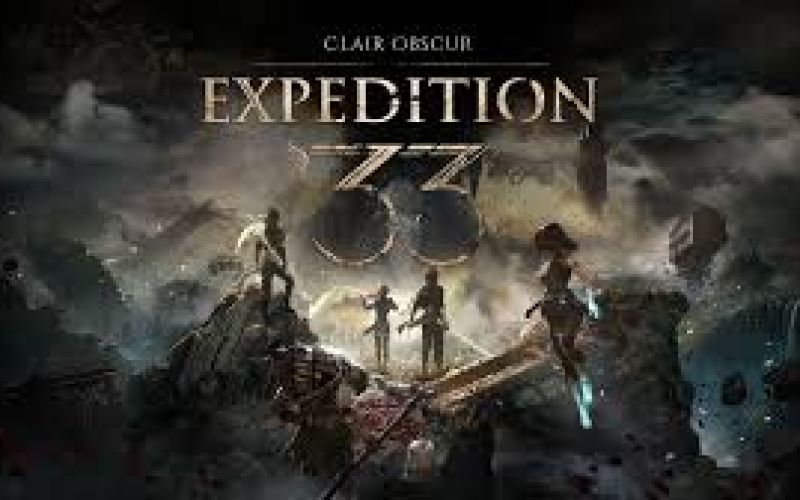
Thursday night at the Indie Game Awards was supposed to be a victory lap for Light & Shadow: Expedition 33. Having swept up the heavy-hitting "Game of the Year" and "Best Debut" titles, developers Sandfall Interactive and publisher Kepler were practically ready to pop the champagne.
But that high didn't even last the weekend.
By Saturday, officials dropped a bombshell that doused the whole mood: the awards were rescinded. The reason was hard and fast—the game’s launch version had contained generative AI assets. Even though the team scrambled to scrub the content later, in this strict rulebook, there are no take-backs. The news hit the overseas community like a grenade.
Honestly, if you scroll through the heated threads, you’ll find barely anyone attacking the game’s actual quality. The anger is mostly directed at a rule that feels a bit, well, out of touch with reality. "Come on, 90% of devs use AI for concepting or prototyping now," one developer pointed out bluntly on Twitter. If we’re going to scrutinize things with a magnifying glass like this, how many future titles can actually walk through those doors with clean hands?
This sentiment sparked a bit of a baseless witch hunt. A lot of players started pointing fingers at the runner-up beneficiary, Prince of Blue, asking with a dose of sarcasm: "I’ve never even heard of this game—can you guarantee it hasn't touched a single pixel of AI?"
See, the conversation had already drifted. It wasn't really about whether Light & Shadow was treated unfairly anymore; it was about the bigger question: "Should AI be counted as a standard tool in the modern dev pipeline?"
However, the official explanation that followed was pretty cut and dry, shifting the issue from "tech ethics" right back to simple "honesty." According to the FAQ update, the crux of the matter lay in the paperwork: Sandfall’s representative checked the box claiming "No Generative AI" during submission. Yet, on the very day of the ceremony, the studio flipped the script and admitted that, yes, AI art assets were indeed used in production.
That contradiction—saying one thing and doing another—was the red line that got them disqualified.
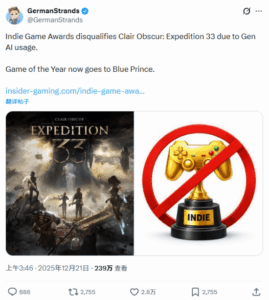
The official stance is unambiguous: it doesn't matter if you deleted it later. The fact that it "existed in the official release," combined with the submission discrepancy, constitutes a violation. It’s a bit like cheating on an exam—even if you swallow the cheat sheet before handing in your paper, if the proctor catches you, the grade is void.
Looking at the result, this was indeed a case of "iron-fisted" rule enforcement, completely unrelated to how fun the game actually is. But in an era where AI tools are seeping into the cracks of creation just like Photoshop did, how long can this black-and-white line really hold? That’s probably the real question this whole storm has left the industry to ponder.
The above content is compiled by ModeZone, a fashion and entertainment magazine.