


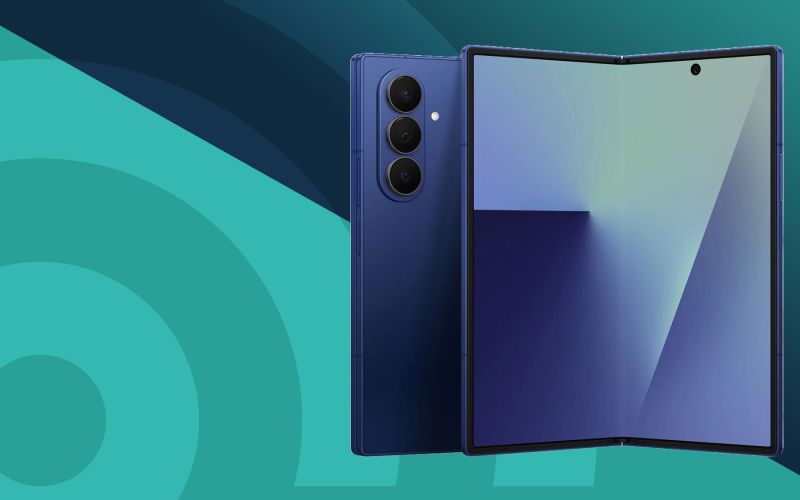
Samsung and Apple: Finally Set for a Head-to-Head Clash in the Foldable Arena
According to South Korean media reports, Samsung plans to launch a brand-new "Wide Fold" form factor phone in 2026. The timing almost perfectly coincides with the debut of Apple’s first foldable device, the iPhone Fold.
In other words, this won’t be a tentative, asymmetric skirmish, but a direct showdown at the same table. Interestingly, the core design philosophies of both products are unexpectedly similar.
The Battle of the 7-Inch Screens
Based on current leaks, both tech giants are focusing on an internal screen size of around 7 inches:
-
Samsung's "Wide Fold": 7.6-inch inner display.
-
Apple's iPhone Fold: 7.58-inch inner display.
The difference between the two is practically negligible, equivalent to a rounding error. More critically, both have opted for a 4:3 aspect ratio, a choice that is not currently mainstream in the foldable market.
A Return to the "Passport" Aesthetic
Insiders reveal that Samsung’s "Wide Fold" solution adopts a design logic similar to opening a passport.
-
Outer Screen: A 5.4-inch OLED display.
-
Inner Screen: Unfolds to present a 4:3 ratio, similar to a traditional book.
This ratio differs from the ultra-tall screens common in today’s smartphones, resembling the visual structure of early CRT televisions or tablets. Naturally, this sparked an immediate discussion upon its release.
It is worth noting that the Galaxy Z Fold 7 (referenced in the context of Samsung's current trajectory) follows a "phone-first" widescreen route (9:21 folded, 18:20 unfolded). This significant shift to 4:3 suggests Samsung is rethinking what a foldable screen "should look like when opened."
Industry Analysis: Experts generally believe the advantage of 4:3 isn't about being "flashy," but about being more stable and natural. It offers a better balance in the hand—similar to holding a book or a notebook—and reduces cropping when browsing the web, reading documents, or viewing photos.
The Trade-off: The downside is equally obvious. With nearly all current movies and video content produced in widescreen formats, a 4:3 ratio will inevitably incur some adaptation costs for the viewing experience. Whether this will appeal to users accustomed to simply "doom-scrolling" videos remains to be seen.
Converging Timelines and Strategies
Both manufacturers are targeting the same launch window:
-
Samsung: Plans to release this wide foldable in Autumn 2026, officially integrating it into the Galaxy Z series. The lineup will likely feature a "One Flip + Two Folds" structure, where the Fold 8 continues the legacy dimensions, while the "Wide Fold" emerges as a new branch.
-
Apple: Expected to debut its first foldable iPhone at its Autumn event in the same year. After watching the market for so long, Apple’s entry clearly won’t be a quiet experiment.
A Flagship Detail: There is a subtle but noteworthy detail: Samsung’s new wide foldable is expected to support 25W wireless charging. Originally planned for the Galaxy S26 Ultra, this is one of Samsung's fastest wireless specs, effectively giving the foldable "flagship-level treatment."
The Verdict
From aspect ratios to launch windows and product positioning, Samsung and Apple are following nearly identical paths.
When foldable phones are no longer just about "bending a phone" but about seriously discussing the form factor and usage utility itself, this 2026 showdown is just starting to get interesting.
The above content is compiled by ModeZone, a fashion and entertainment magazine.