

Samsung Electronics Middle East & North Africa (MENA) Vice President of Marketing & E-commerce Omar Saheb posted on LinkedIn yesterday to celebrate the launch of the brand’s first tri-fold smartphone, the Galaxy Z TriFold. In the post, he shared photos of himself holding the device — but sharp-eyed observers quickly noticed that the phone in his hand looks different from the retail version. Instead of the three-camera layout seen on the commercial model, the phone in the photo appears to have four rear cameras.
Based on this discrepancy, many believe the phone Saheb held is not the final production unit but one of Samsung’s internal prototype models created and tested before mass production. In the photos, the fourth camera at the bottom of the array is visibly thinner than the other three, suggesting it might have served a different purpose or been part of an experimental imaging setup.
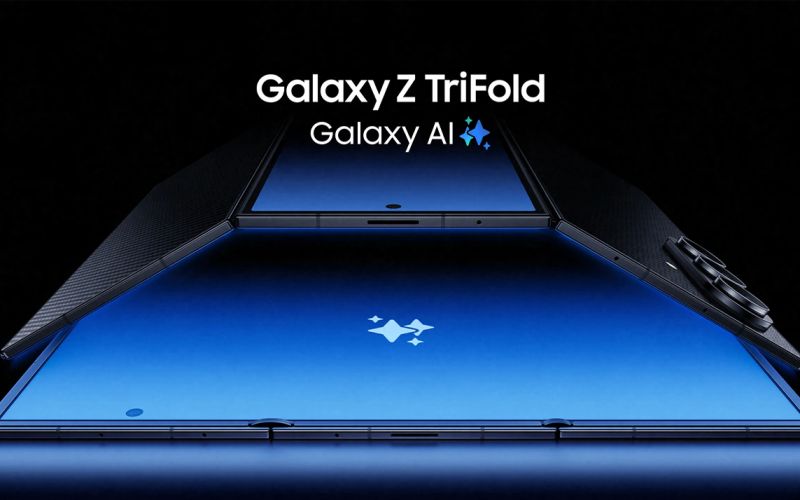
Samsung’s official retail version of the Galaxy Z Fold features a three-camera system, comprising a 200-megapixel primary sensor, a 12MP ultra-wide lens, and a 10MP telephoto lens with 3× optical zoom. The tri-fold design features an inward folding mechanism that helps protect the main screen, a Snapdragon 8 Elite for Galaxy processor, a 5,600 mAh three-cell battery, and support for 45 W fast charging. The front cameras on both the cover and inner displays are reportedly 10 MP each.
Since it’s still early for a second-generation TriFold, the four-camera unit is widely regarded as an internal prototype that Samsung tested but ultimately did not bring to market, design priorities, such as thinness, internal space allocation, or hardware balance, may have driven the decision to remove the fourth camera.
Design priorities, such as thinness, internal space allocation, or hardware balance, may have driven the decision to remove the fourth camera.
The above content is compiled by ModeZone, a fashion and entertainment magazine.