Bethesda Was "Walking on Eggshells" with Fallout 3, But Finally Relaxed with Fallout 4
Looking back now, it is hard to imagine that Bethesda was under significant psychological pressure when making Fallout 3.
Recently, Emil Pagliarulo, the lead writer (and lead designer) of Fallout 3, recalled in an interview with GamesRadar+that when Bethesda first took over the Fallout series, they were far from the confident studio we see today. Compared to "bold innovation," the team's primary concern at the time was not to screw up the franchise.
The Weight of History
Timeline-wise, Bethesda has technically "owned" Fallout for nearly twenty years—they licensed it in 2004 and bought the IP outright in 2007. But the real test came in 2008.
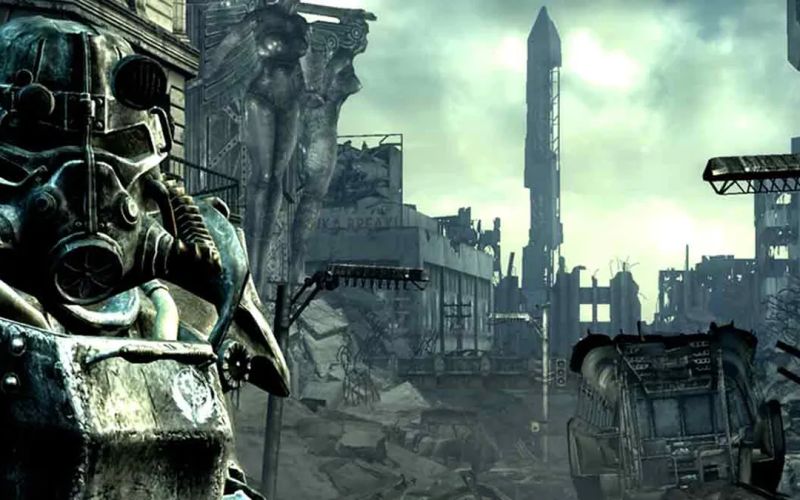
That year, Fallout 3 was released, propelling a classic RPG that had been dormant and largely restricted to PC circles into the mainstream market. Console players truly engaged with a mainline Fallout title for the first time, transforming the series from a "cult classic" into an industry juggernaut.
But behind that success, confidence was not the dominant emotion.
Pagliarulo stated bluntly that Fallout 3 was a transitional work.
"We were [making Fallout] for the first time," he said. "So it was really important to us that we were respectful to the franchise and respectful to the previous games."
He pointed out a crucial distinction: "There's a difference between owning a franchise and really feeling like you own it."
During the Fallout 3 era, Bethesda was clearly still in the mode of "taking over a classic." They knew the weight of the IP and the expectations of the players, so their creative process was inevitably filled with awe, perhaps even caution. Many decisions were likely made after repeatedly weighing, "Is this pure enough?"
The Shift to Ownership
This state of mind persisted until Fallout 4.
By the time Fallout 4 launched in 2015, Bethesda had been guarding the series for over a decade. They had not only released the Game of the Year-winning Fallout 3 but also published the critically acclaimed Fallout: New Vegas. At that point, the team's understanding and command of Fallout had undergone a complete transformation.
"I think by the time we got to Fallout 4, we were a lot more relaxed," Pagliarulo said. "We felt like, okay, we don't have to be as reverent. We can do new stuff."
This quote perfectly summarizes Fallout 4's place in the series.
While it may have sparked controversy regarding its style and systems, from a creator's perspective, it was the first time Bethesda truly shaped Fallout as "masters" rather than "inheritors."
The Verdict
From awe, imitation, and inheritance to the courage to rewrite and expand—Bethesda’s relationship with Fallout has completed its transformation between these titles.
This shift is a hurdle that every studio taking over a classic IP must eventually face: The moment you stop protecting the legacy and start building your own.
The above content is compiled by ModeZone, a fashion and entertainment magazine.