


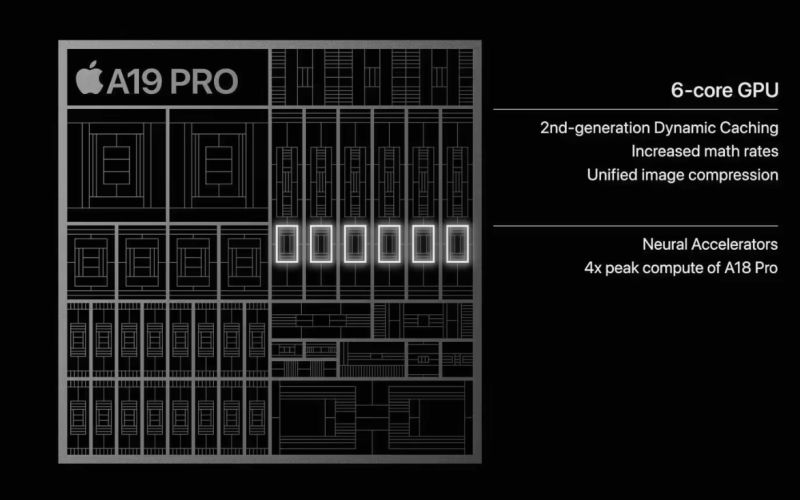
According to tech media SemiAnalysis in a tweet today (December 11), Apple’s upcoming A19 and A19 Pro chips powering the iPhone 17 series have die sizes that are 9% and 10% smaller than their predecessors, the A18 and A18 Pro, respectively — a notable achievement in chip design.
In semiconductor terms, die size refers to the physical area of the core silicon chip — similar to the floor space of a house. A smaller die size often means better manufacturing efficiency, higher yield, and lower cost, provided that performance is maintained or improved.
SemiAnalysis points out that both the A19 and A19 Pro are built on TSMC’s 3nm N3P fabrication process. While this process theoretically offers only about 4% die size reduction compared to the previous 3nm N3E node, Apple’s chips achieve far more, indicating that Apple’s internal design optimizations played a significant role in surpassing the benefits of the pure process-node improvements.
🧠 Chip Design Innovations
- Apple engineers managed to shrink the System Level Cache (SLC) area from 1.08 mm² to 0.98 mm², while maintaining a capacity of 4 MB, demonstrating an efficient use of silicon real estate.
- The layout of the Image Signal Processor (ISP) and media engine was also optimized to free up additional space.
- The space saved from these reorganizations was reallocated toward larger energy-efficient cores and enhanced GPU modules, increasing transistor density and functional capability even as overall die size shrank.
🚀 Performance & Efficiency Gains
- Although the high-performance cores physically shrank by about 4%, Apple compensated by increasing operating frequency to maintain performance.
- The more transformative gains came from the energy-efficient cores in the A19 Pro. SemiAnalysis notes that these cores underwent significant architectural improvements, resulting in up to 29% performance uplift at nearly the same power consumption — a major efficiency breakthrough.
🏆 Benchmark Leadership
Thanks to these design and optimization efforts, the A19 Pro reportedly outperforms competitors such as the Snapdragon 8 Elite Gen 5 and Dimensity 9500 in Geekbench 6 tests, establishing industry-leading performance per watt.
This analysis highlights how Apple has gone beyond pure process-node improvements to extract more efficiency and performance from the same fabrication technology through innovative chip architecture and layout optimization.
The above content is compiled by ModeZone, a fashion and entertainment magazine.