


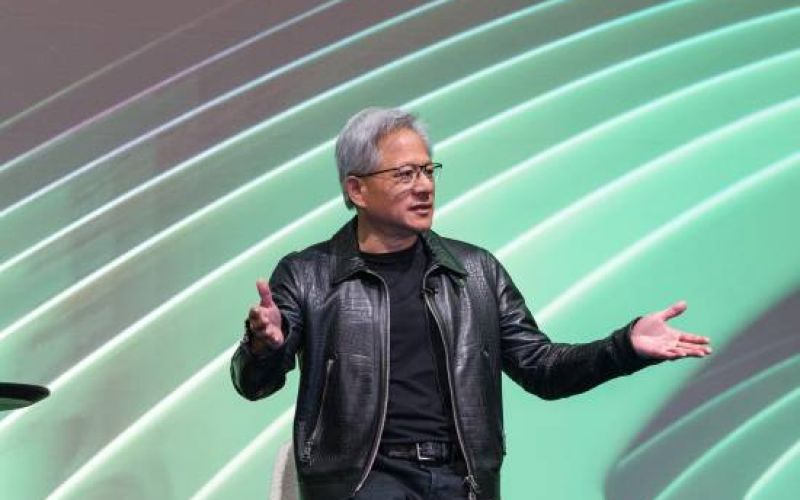
Recently, Jensen Huang, CEO of NVIDIA, publicly questioned whether traditional central processing units (CPUs) will remain necessary in an era dominated by accelerated computing and artificial intelligence (AI). He argues that as AI, large-language models, and massive data workloads become central to modern computing, the ability of general-purpose CPUs to scale performance is increasingly inadequate. Meanwhile, graphics processing units (GPUs), with their parallel-processing architecture, and accelerated-computing ecosystems like CUDA, are far better suited to meet these demands.
Huang emphasized that CPU performance scaling has slowed dramatically, while computational demands continue to grow exponentially — leading to a phenomenon he termed “compute inflation.” He suggested that for compute-intensive workloads — especially those involving AI, large-scale data processing, or parallel tasks — GPU-centric architectures offer better efficiency, lower energy consumption, and higher throughput.
Although he doesn’t claim CPUs will disappear overnight, Huang’s remarks point toward a future where GPUs (and other accelerators) become the core of data centers and high-performance computing, and CPUs may be relegated to a supportive role or used in hybrid architectures where heavy lifting is done by GPUs.
NVIDIA’s current strategy reflects this vision: the company is aggressively pushing its GPU, networking, and software (CUDA) ecosystem to enable a shift from a CPU-centric to a GPU-centric model — one better suited for AI inference, training, and large-scale parallel workloads.
The above content is compiled by ModeZone, a fashion and entertainment magazine.