
When you hear Resident Evil, most players instantly think of Resident Evil 2, Resident Evil 4, or the recent remakes. Yet, over nearly thirty years of development, Capcom actually released a wealth of non-numbered, non-mainstream, and even highly experimental titles for the series. Some were met with high hopes, others mere brief forays, but they've all gradually faded from players' sightlines.
GameSpot's feature "12 Resident Evil Games You Forgot Existed" revisits these "games you might've forgotten even existed," tracing them in release order to reveal a "hidden development thread" in the Resident Evil lineage.
Early Exploration Era: The Dawn of Genre Experiments (1998–2001) Resident Evil Survivor, launched in 1998, was one of the series' earliest departures from the traditional survival horror mould. It boldly adopted a first-person perspective, attempting to fuse Resident Evil with shooter mechanics—but poor balance in controls, pacing, and atmosphere led to a dismal reception.
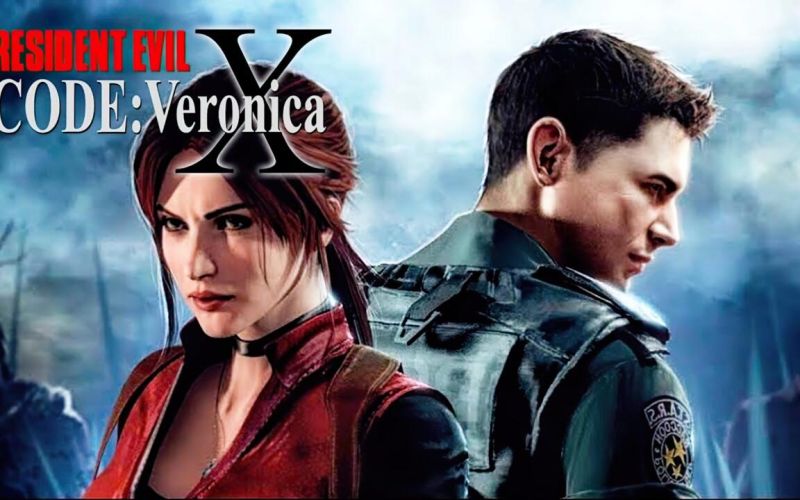
Resident Evil Code: Veronica from 2000 holds a significant place in series lore, yet it's often overlooked by later players due to its Dreamcast debut and lack of numbering. It continues the Raccoon City storyline, forming a crucial link in Claire and Chris's tale.
The 2001 release Resident Evil Gaiden pushed experimentation further. As a Game Boy Colour title, it fully broke from the main series' visuals and combat, becoming one of the most controversial—and easily forgotten—entries.
Multiplayer and Light-Gun Experiments (2003–2009) Entering the PS2 era, Capcom ramped up "gameplay branching."
Resident Evil Dead Aim (2003) blended third-person movement with first-person shooting, serving as a transitional light-gun form.
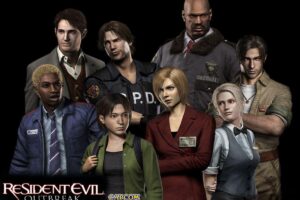
Resident Evil Outbreak (2004) and Outbreak File #2 (2005) went bolder, pioneering online co-op survival horror—visionary for its time, but hampered by network limitations and design flaws, leaving no lasting impact.
2006's Resident Evil: Deadly Silence was a DS port of the original Resident Evil, adding touch controls and dual-screen mechanics, though its influence remained niche.
In the Wii era, Capcom retooled series history via on-rails shooters. The Umbrella Chronicles (2007) and The Darkside Chronicles (2009) acted more as plot recaps and fan service—appealing to veterans but offering little to the series' forward momentum.
Action Shift and Derivative Divergence (2012–2016) Post-2010, Resident Evil leaned action-heavy, splintering its spin-offs accordingly.
Resident Evil: Operation Raccoon City (2012) centred on third-person team shooting from the "villain perspective," reimagining Raccoon City—but incomplete execution split opinions sharply.
That same year, Resident Evil: Revelations debuted on 3DS as a "return to horror" effort, earning praise for atmosphere and pacing—one of the spin-offs' brighter successes. Its sequel, Revelations 2 (2015), used episodic releases to emphasise story and character depth.
Meanwhile, Capcom pivoted Resident Evil toward competitive multiplayer: The Mercenaries 3D (2013) zeroed in on mercenary mode with sparse content; Umbrella Corps (2016) chased PvP shooting, shedding the series' horror essence and drawing cold responses.
Others, like Resident Evil: Street Invasion, were tie-in promo minigames—marketing blips swiftly buried by time.
Epilogue: Forgotten, But Not Without Purpose These titles faded not solely from "low quality," but often because:
- Born too soon (network tech, platform limits)
- Blurry positioning (straddling canon and spin-off)
- Overly radical (gameplay drifting from core identity)
Yet, these missteps, trials, and offshoots ultimately guided Capcom toward Resident Evil 7 and the Resident Evil 2 remake. If the numbered mains forged Resident Evil's "classic icon," these overlooked games chronicle the series' true path through confusion, exploration, and trial-and-error.
The above content is compiled by ModeZone, a fashion and entertainment magazine.