


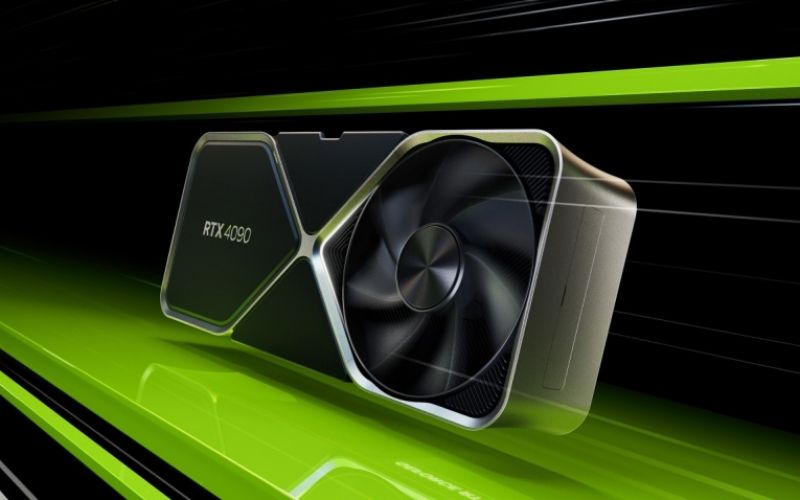
On December 19, NVIDIA officially announced that the Blackwell-based RTX PRO 5000 72GB professional graphics card is now generally available. As the name implies, this update centres on one thing and one thing only: massive VRAM.
The card’s positioning is clear-cut: it sits right between the standard 48GB RTX PRO 5000 and the flagship 96GB RTX PRO 6000. Put simply, it carves out a realistic middle ground for AI developers who are stuck in that awkward spot where "48GB isn't quite enough, but the flagship is way out of budget." For balancing project scale, deployment needs, and wallet constraints, the 72GB version hits a sweet spot.
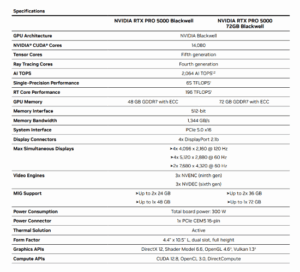
In terms of core silicon, the new card doesn't reinvent the wheel. It still utilises the GB202 GPU with 14,080 CUDA cores, delivers 2064 TOPS of AI compute, and maintains a 300W TDP. Those specs are identical to the 48GB version. The real overhaul is in the memory subsystem.
NVIDIA bumped the capacity from 48GB straight to 72GB—a flat 50% increase—while keeping the 384-bit bus and 28Gbps memory speed. This "same core, maxed memory" strategy targets a very specific bottleneck in professional workflows: often, raw compute power isn't the problem—fitting the model into memory is.
According to official benchmarks, this upgrade yields immediate results. Compared to the 48GB model, the 72GB version delivers up to a 3.5x boost in image generation, 2x faster text generation, and a 2.1x improvement in Large Language Model (LLM) inference. In practical terms, many tasks that previously required model sharding or running in batches can now be handled comfortably on a local machine.
The gains are equally significant for content creation and rendering. Using professional tools like Arnold, Chaos V-Ray, Blender, and D5 Render, NVIDIA claims rendering times are slashed by up to 4.7x. For workflows where time literally equals money, that stat is often more persuasive than any synthetic benchmark score.
It’s also worth noting that this strategy—segmenting product lines by VRAM capacity—might not stay exclusive to professional cards. Industry speculation suggests that the future RTX 50 SUPER consumer series could adopt a similar approach. If that happens, "VRAM anxiety" might soon become a much more universal experience.
As for pricing, I can tell you that the final tag for the RTX PRO 5000 72GB hasn't been fully detailed yet. While it certainly won't be cheap, it finally provides a necessary off-ramp for memory-sensitive users who need more headroom without being forced to jump all the way to the flagship tier.
The above content is compiled by ModeZone, a fashion and entertainment magazine.