


The Shift Toward Live-Service Games
For years, PlayStation has been synonymous with high-quality, narrative-driven single-player games. Titles like *God of War, Horizon Zero Dawn, and Uncharted are celebrated for their deep storytelling, character development, and immersive worlds. However, in recent years, Sony’s focus has shifted towards the increasingly popular live-service games model, a move that has sparked widespread criticism among industry veterans and players alike.
Shawn Layden's Critique of Live-Service Games
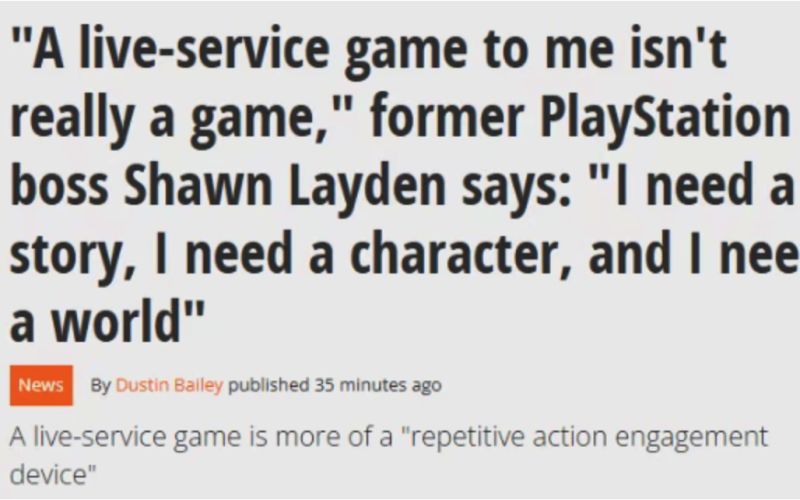
Shawn Layden, the former president of Sony Interactive Entertainment, has been particularly outspoken about this shift. In a recent interview with The Ringer, Layden was blunt about his feelings toward live-service games, stating:
“To me, live-service games are not really games. They're interactive devices where players just repeat actions.”
Layden went on to explain that for him, a true game must have three core elements:
“Story, characters, and world.”
He emphasized that single-player games like *Horizon, God of War, and Uncharted have all of these components, providing rich, emotional experiences. In contrast, live-service games, according to Layden, only focus on encouraging players to repeatedly engage in the same actions, with minimal storytelling or world-building.
The Decline of Single-Player Games at Sony
Layden’s comments are rooted in his own experiences at Sony, particularly the increasing pressure within the company to shift away from single-player, story-driven games. He admitted that Sony’s internal push to reduce investments in narrative-driven titles was one of the key reasons behind his departure in 2019.
“Live-service games aren’t my strong suit,” Layden confessed.
“The push to decrease focus on single-player experiences was a key factor in my decision to leave.”
During his tenure at Sony, Layden oversaw the development of numerous successful single-player titles, but the rise of the live-service model began to take precedence in the company's long-term strategy.
Examples of Struggles in Sony’s Live-Service Attempts
Layden also pointed to failed live-service projects within Sony’s portfolio, highlighting the shortcomings of this model. One of the key examples he cited was The Last of Us multiplayer project, which he described as “a game that never made it to the finish line.”
He also criticized Starhawk, another live-service game from Sony, stating that it was an example of a title that “nobody wanted to play,” or rather, it didn’t attract enough players to sustain a thriving community.
“Some games are simply not meant for a live-service model, and these examples show that trying to force them into it leads to failure,” Layden explained.
The Future of PlayStation: A Balancing Act?
Shawn Layden’s comments raise an important question about the future direction of PlayStation’s game portfolio. While live-service games are undeniably profitable and popular, they lack the narrative depth and single-player focus that PlayStation has built its reputation on.
With the success of games like God of War Ragnarok and Horizon Forbidden West still fresh in players’ minds, the tension between maintaining PlayStation’s single-player heritage and adapting to the changing market demands remains a key challenge for the company.
As more gaming companies chase after the live-service model’s sustained revenue streams, it will be interesting to see how Sony balances the emotional storytelling fans love with the lucrative potential of ongoing, multiplayer-driven experiences.
The above content is compiled by ModeZone, a fashion and entertainment magazine.