What social/community features does Petit Planet offer
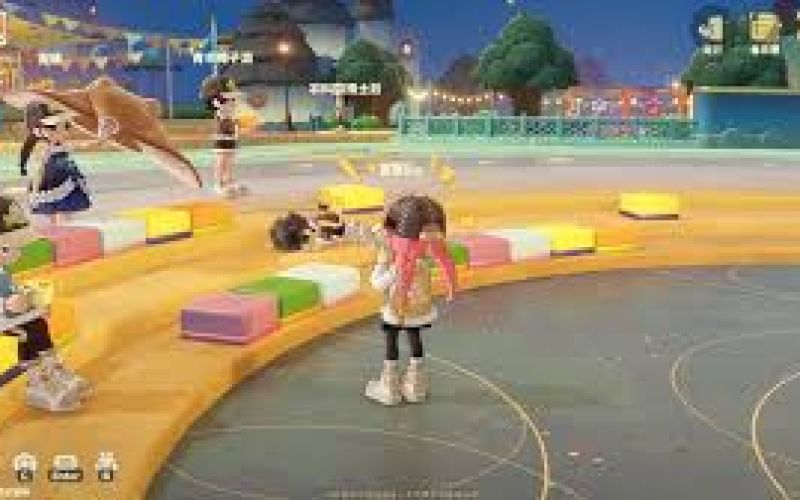
- Shared multiplayer hub — Galactic Bazaar: Petit Planet provides a dedicated online social space called the Galactic Bazaar. In this hub, players can meet, chat, trade items, play mini-games (e.g., music- or rhythm-based activities), hang out in cafés (both public and private with friends), and more.
- Visiting/sharing planets: Outside of the hub, players can travel to other players’ planets (or islets) for visits, and conversely invite others to their own planet. This supports exploration and direct social interaction in a personalised world, rather than being limited to a single lobby or town.
- NPC + “Neighbour” companions with social bonds: Each player’s planet can host “neighbours” — fuzzy/animal-like NPCs (or creatures) with whom players can build relationships (through conversations, gifts, daily interactions). These relationships affect the “vibe” and “culture” of the planet, giving each player’s world a unique social flavour.
- Co-op and cooperative-style activities: In addition to social hangouts and visits, Petit Planet supports cooperative endeavours, such as exploring star islets together (e.g., “Starsea Voyages”), discovering rare creatures/recipes, and sharing resources and experiences, which adds collaborative, shared-history potential among players.
- Customisation, personal expression, and social show-off: Because each planet can be deeply customised (terrain, sky, buildings, decorations, etc.), players can express their personal aesthetic tastes, which makes visiting others’ planets more meaningful, encourages creativity, and supports a kind of social status/community prestige dynamic.
🎯 What makes Petit Planet a good candidate to become a popular multiplayer/social‑casual game
- Blending cosy life‑sim + multiplayer social dynamics — Many existing “social sim / cosy / life‑sim” games are single‑player or limited in social features; Petit Planet aims to combine deep single‑player‑style planet building with meaningful social multiplayer: hub meetups, visits, co‑op voyages. This hybrid appeals to both “chill solo‑players” and “social players.”
- Customisation + identity + community uniqueness — Because players can customise their planet’s look, design their personal “home planet,” there is room for creative expression — and sharing these creations becomes a social activity in itself. This mechanic fosters a long-term community where people showcase their designs, collaborate, or exchange ideas.
- Flexibility: relax or socialise at your own pace — The game’s “slow living / cosy” vibe means that players who don’t want intense competitive pressure can still enjoy visiting, trading, and building at their own tempo; while social‑oriented players can actively engage in hub events, planet visits, and cooperative exploring. This inclusiveness broadens its potential audience.
- Shared exploration & discovery — The “galactic exploration” setting (multiple planets/islets/worlds) adds novelty beyond the usual single-town/farm simulation; social cooperation in discovering new islets/resources/recipes gives players shared goals and bonding opportunities.
⚠️ What could limit its success as a “hit” multiplayer social game
- Reliance on reaching a critical mass of players — For social hubs, planet visiting, and co-op exploration to feel alive and vibrant, there needs to be a sufficiently large and active player base. If community size remains small, the social features might feel empty or dull.
- Potential balance between solo and social content — If too much emphasis is put on social/co‑op, players who prefer solitude may feel pressured; if too little, it may fail to capitalise on multiplayer potential. Designing a balance that satisfies both groups is a challenging task.
- Monetisation and long-term engagement risk — Since the developer HoYoverse has a history with gacha and live-service models, there may be pressures to monetise or push regular updates. Without careful balance, monetisation could disrupt the cosy/casual appeal, or if updates are sparse, players may lose interest.
- Content depth & replayability dependency on updates/community involvement — To stay alive as a community game, Petit Planet will need a steady stream of new content: events, new planets/islets, customisation items, and social features. If post‑launch support is weak, shared worlds may stagnate.
🧮 My Assessment: Has Genuine Potential — But Success Depends on Execution & Community
Yes — I believe Petit Planet has a solid shot at becoming a popular multiplayer/casual social title. Its blend of cosy life simulation, deep customisation, social hubs, cooperative exploration, and planet-wide personalisation gives it a unique identity that could attract a diverse audience: those yearning for a “digital home & community,” players who like creative expression, and social gamers looking for depth without aggression or competition.
However, reaching “hit status” will not be automatic. Success will largely depend on:
- whether the game manages to build and retain a vibrant, active community;
- how well the developers support and expand its social & co‑op features over time;
- whether monetisation, updates, and content cadence are handled in a way that respects the cosy/sandbox spirit rather than undermining it;
- and if the balance of solo vs. social content remains flexible, so that different types of players can enjoy it.
The above content is compiled by ModeZone, a fashion and entertainment magazine.